March 28, 2024
Objects in the mirror are closer than they appear — and far more dangerous.
It started with a phone call.
I was parked in front of Edna Hill Middle School, waiting to start my day — middle of COVID, face shields, plexiglass barriers — when the New York Times rang. For some strange reason, I picked up, even though the number was unfamiliar.
They wanted a quote — a reaction.
“How do you feel about your sister Tracii Hutsona’s arrest?” a voice said.
I wish I could say I almost dropped the phone, but this was no shock. I’d been following my sister’s actions from afar ever since she was released from federal prison around 2015 — mostly through Google, and by keeping tabs on her unwatchable YouTube series, Homeless Millionaires. I knew she’d been living large — larger than she should have.
“You don’t know?” the journalist said. “She stole more than a million dollars (allegedly) from Joumana Kidd, ex-wife of basketball player Jason Kidd.”
What I said next, I was unable to censor. Instead, I began churning out truth bombs with the speed and regularity of a Pez dispenser.
“She’s always been a con artist. Ever since she was a kid. And she’s good. She’s like a cult leader, the way she gets people to return to the same poisoned trough.”
Somewhere in the conversation, I realized: Where’s your filter? Again, it wasn’t shock. I finally had a platform — a voice. What she’d done, what they’d all done, was wrong, and it was up to me to say something about it.
“I don’t know if I should say any more,” I added, way too late.
“Then we’ll use your statement from 2008,” the journalist replied. “From when she swindled you. It’s all in the police records.”
This was a subtle threat. She knew. I knew. I’d told the officer a lot of things in 2008. Tracii just conned me for the last time. I wanted answers. I wanted Tracii to fear me. If the New York Times printed my statements from back then, let’s just say, it wouldn’t have been a good look.
I had no choice. I had to talk. I told the journalist about Grandma and the credit cards, about how at 15, Tracii had stolen my license and taken a joyride to Los Angeles, racking up tickets in my name. I also marveled at my sister’s skill. I knew she was going to make the news one day.
“You know the Arnold Schwarzenegger movie Jingle All the Way?” I asked. “That’s how Tracii got one of her vehicles. She convinced a car dealer she was on the set.”
I said some things about my parents that weren’t so nice — and later walked them back. This wasn’t the time. But the more the journalist questioned me, the more shame poured in — familiar, ancestral, and uninvited. The shame wasn’t just mine. It was part of the family system, baked into the DNA — but assigned to a carrier: me. And now I’d done it, inserted myself by becoming a motor-mouth. Getting a chance to speak, not just about my sister, but about the machinery behind her — the systems, silences, and betrayals that made her possible.
I thought years of therapy had helped me get over my Tilt-A-Whirl childhood. Tracii and I weren’t just stepping around landmines; we were ducking hand grenades. But this put me in a spin. Forget the objects in a mirror — we grew up in a funhouse. Nothing in the glass was even real. In college I studied psychology (because what else?) Like most psych majors, not only did I want to understand and to help. But what I was dealing with wasn’t just academic — it was personal.
That day in the parking lot, I couldn’t shake the feeling that I should’ve been the one in the orange jumpsuit. But I had done nothing wrong. Once in a while, I argued and fought back, but most of the time I’d been meek. I’d been afraid.
After that, I became obsessed. I went down every rabbit hole, tracking down her former classmates, interviewing her victims, dissecting forwarded text messages like they were forensic evidence. I Zoomed with four of the people she conned. By the end of that call, I knew: her behavior was monstrous. But maybe even worse — it had been allowed. Excused. Enabled. And still, I couldn’t look away. I couldn’t stop digging. I needed to know.
Once I started to write, patterns emerged: every generation, someone was sacrificed to preserve the family myth. It was ritual, almost. And if you didn’t play your role, you became the next offering. I came to understand what Hannah Arendt meant by the banality of evil — that seemingly ordinary people can commit quiet, unintentional harms, passing them down through generations in the name of loyalty and survival.
As for Tracii, the ride-or-dies in our family closed ranks around her. Slowly, I moved away from them. I started a burn-it-all-down memoir, but that wasn’t right. I didn’t want vengeance. I wanted meaning.
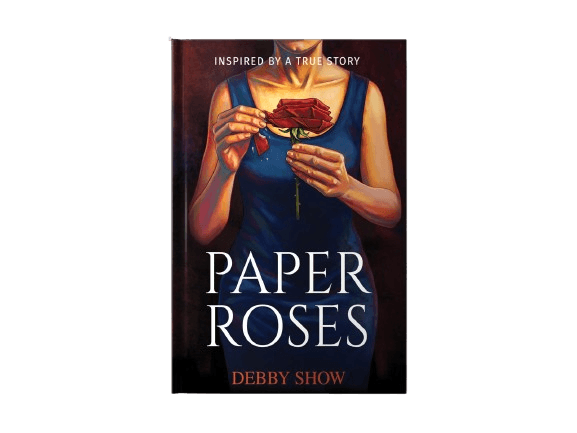
Autobiographical fiction gave me that. Paper Roses allowed me to explore emotional truths that s memoir couldn’t contain. Memoir would have kept me trapped behind the funhouse mirrors of my childhood - forced to present events as if they were objectively true when half the time, what was reality but a concept? Autobiographical fiction let me step outside the distorted glass entirely.
So I gave myself permission to tell the truth sideways — through characters who wrestle with identity, inheritance, ache, and longing. My fiction became a slow revelation, truths surfacing like photographs developing in a darkroom - appearing gradually, in their own mysterious order. What I ended up with wasn’t just a voice of survival. It was a rebel yell — a defiant refusal to carry shame. It's not for me to say the spell will be broken but at least I have offered a template.
We inherit more than genetics. We inherit roles, silences, delusions. In Paper Roses, I asked: What if you could refuse your assignment? What if you could put the shame down and name the truth instead?